Biomechanics, Explained: How Movement Quality Shapes Performance
You don’t suddenly get slow.
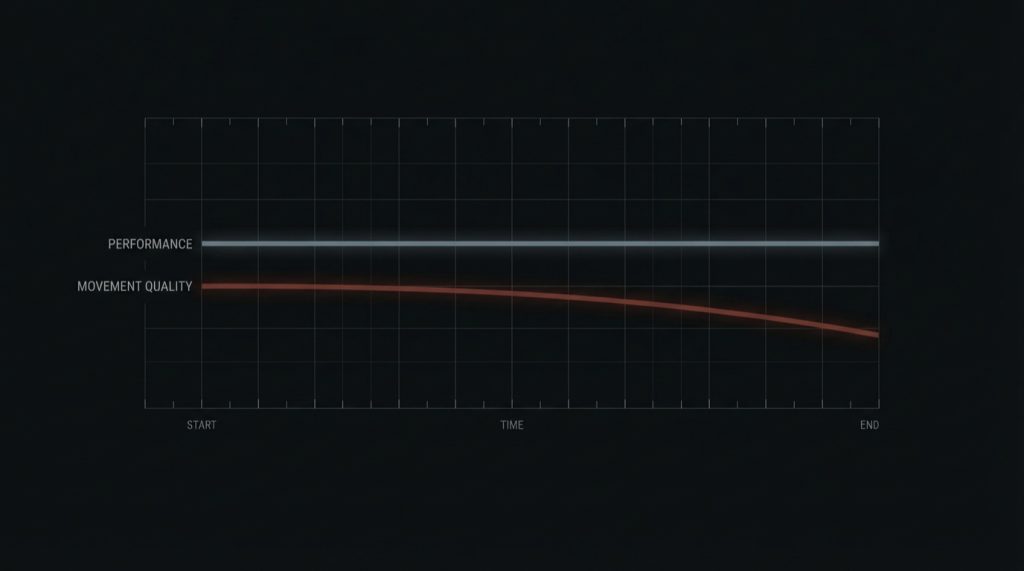
Before your power drops, before your pace falls, and long before your heart rate spikes—something else changes first.
Your movement.
Your posture starts to drift. Your control fades. Small, often invisible compensations begin to appear. Most athletes can feel this happening, but they’ve never had a way to see it. That is where biomechanics comes in.
This isn’t lab science for the sake of it. This is the missing link in endurance performance.
Control is lost gradually — long before output collapses.
What Is Biomechanics (Really)?
In simple terms, biomechanics is the study of how forces move through the body and how the body responds to those forces.
It isn’t about muscles in isolation, and it isn’t about achieving a “perfect” textbook form. Instead, biomechanics is the bridge that connects:
Your Posture
Your Stability
Your Efficiency
Your Ultimate Performance
Every time you pedal, run, or try to hold an aero position under fatigue, biomechanics is the engine under the hood.
“Biomechanics explains how forces enter the body — and what comes out.”
Forces don’t disappear — they travel through the body.
Why Movement Quality is the Key to Endurance Performance
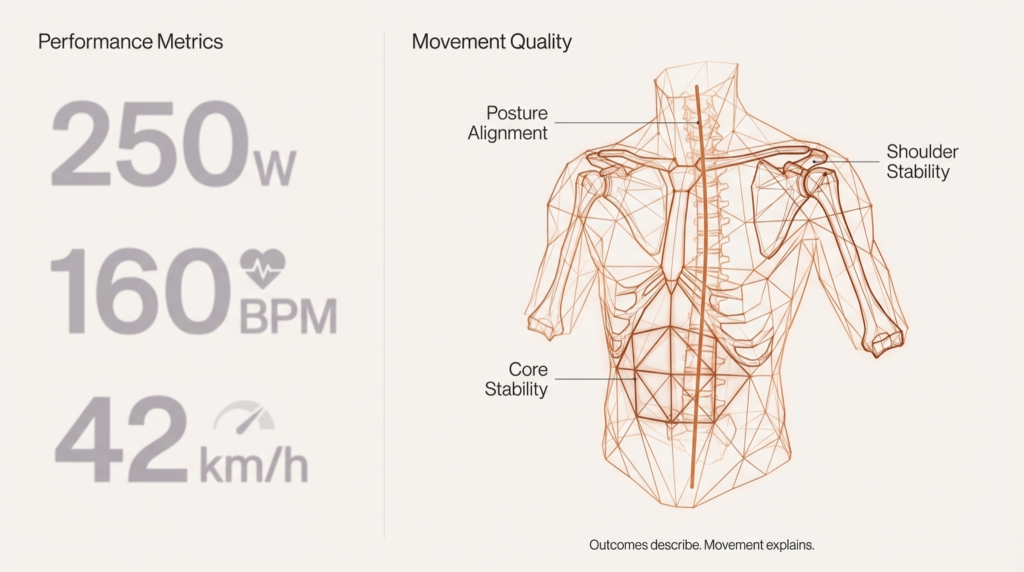
Traditional training metrics—Power, Pace, Heart Rate, and Speed—are outcome metrics. They are descriptive, not diagnostic. They tell you the result of your effort, but they don’t explain the process.
Biomechanical changes almost always appear before the performance drop-off:
You hold the same watts, but your posture collapses.
You maintain your pace, but your movement becomes erratic.
You finish a session “on numbers,” but feel physically “off” without knowing why.
This gap between how you perform and how you move is where races are won or lost.
Metrics describe results. Biomechanics explains why they happen.
The 5 Core Concepts of Athletic Biomechanics
To master your movement, you don’t need a PhD. You just need to understand these five pillars:
1. Stability
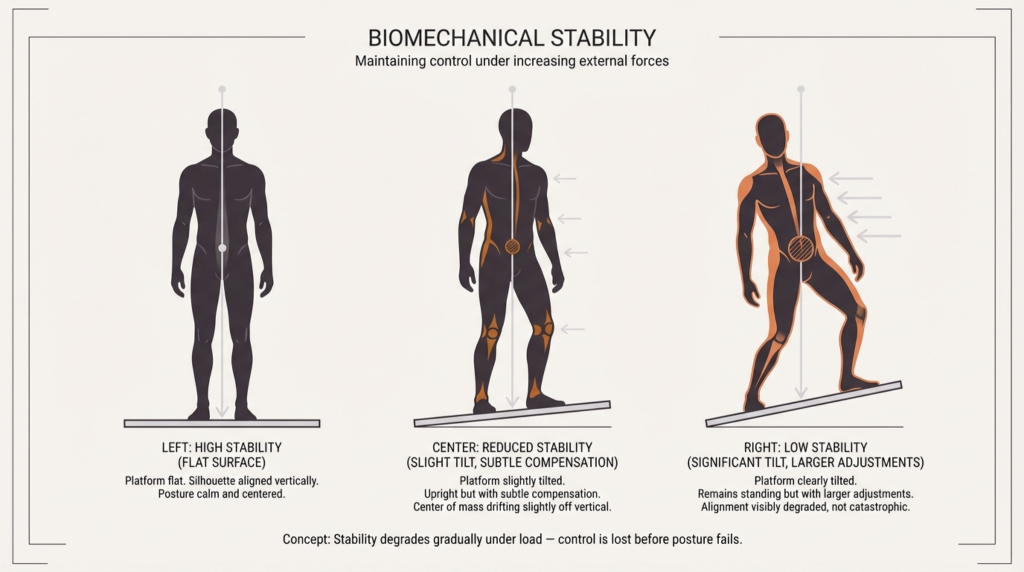
Stability is your ability to control your body against external forces like gravity, road impact, or wind. It isn’t about being rigid; it’s about staying controlled as conditions get harder.
What it feels like:“Everything feels ‘loose’ or heavy late in the session.”
Why it matters: Loss of stability is usually the first domino to fall when fatigue sets in.
Stability degrades before posture collapses.
Stability is control under increasing disturbance, not rigidity.
2. Posture
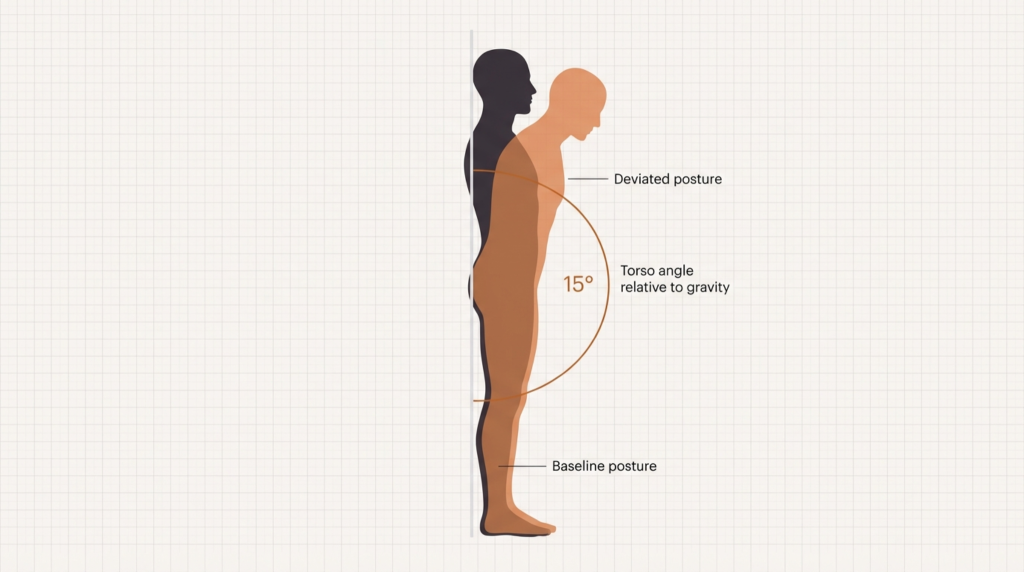
Posture is how your body segments are arranged relative to gravity. It is dynamic, not static.
What it feels like: Shoulders dropping, hips rocking, or the torso collapsing forward.
Why it matters: Small posture shifts drastically change your aerodynamics and how your muscles distribute load.
“Most athletes train outcomes. Very few train control.”
Small postural shifts create large performance consequences.
3. Variability
Healthy movement includes small, natural fluctuations. However, when variability becomes excessive, it’s a red flag.
What it feels like: Your pedaling or stride feels “clunky” or less smooth than usual.
Why it matters: Excessive variability often signals a loss of coordination and the transition into “survival mode” movement.
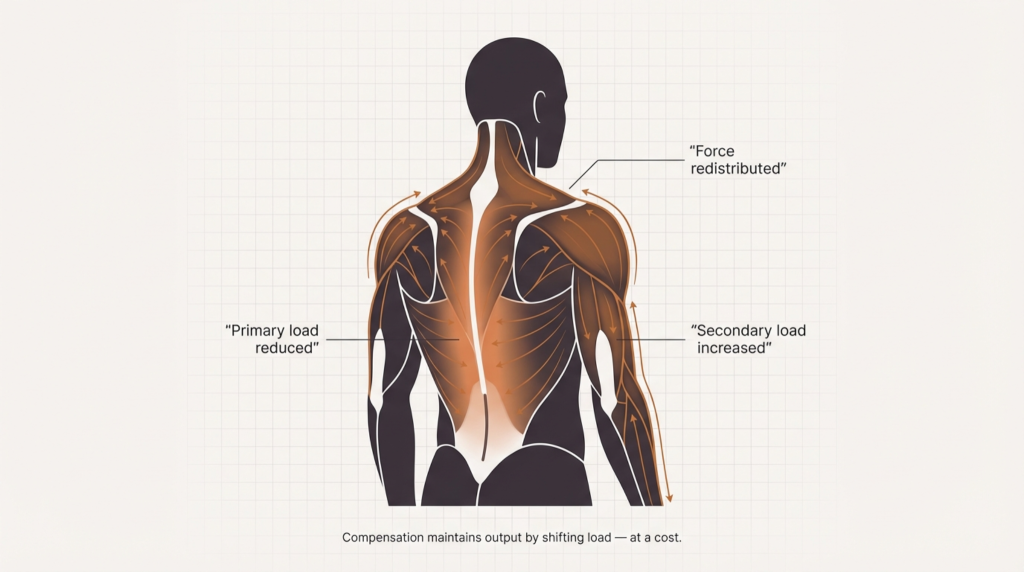
This happens when one part of the body works harder because another part is fatigued or inhibited. It keeps you moving, but it comes at a high price.
What it feels like: A tight neck, a localized ache, or feeling like one leg is doing all the work.
Why it matters: Compensation is the leading cause of “unexplained” overuse injuries.
The body preserves output by shifting load — at a cost.
5. Efficiency
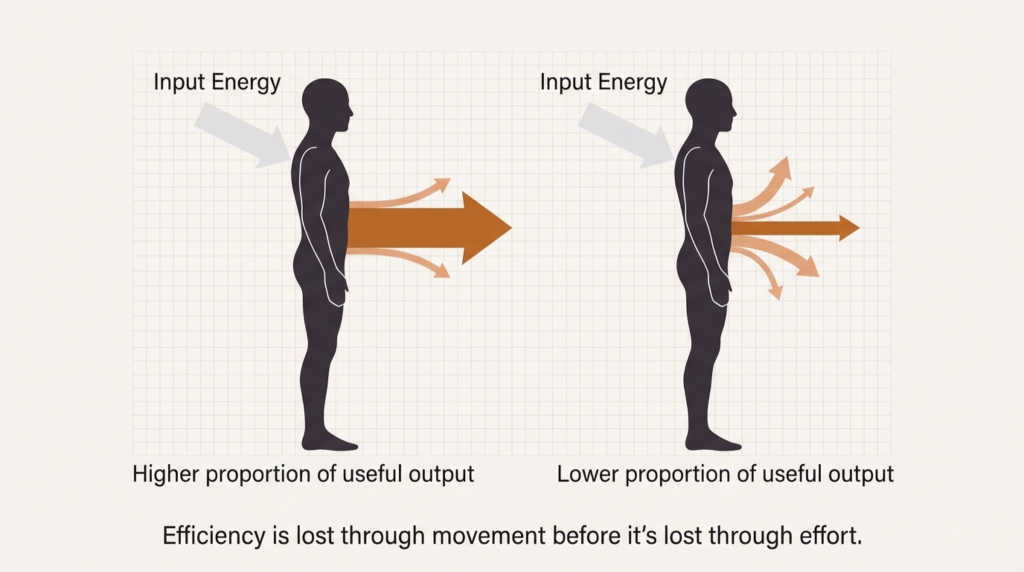
Mechanical efficiency is how much useful output you get for a specific energy cost.
What it feels like:“Today felt way harder than it should have for this speed.”
Why it matters:Efficiency is lost through movement long before it’s lost through effort.
Efficiency is lost through movement before it’s lost through effort.
Taking Biomechanics Out of the Lab
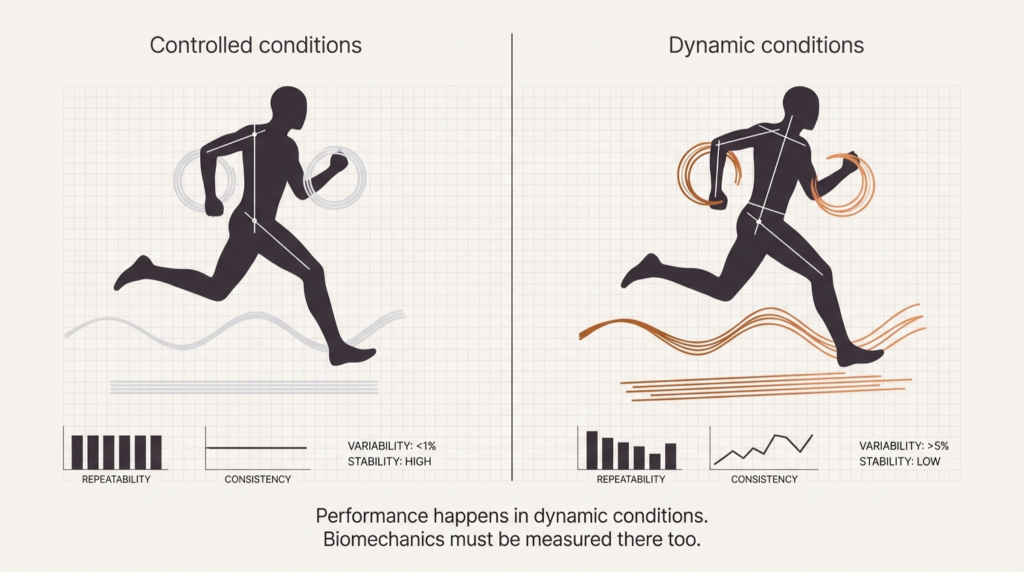
Historically, biomechanics required a laboratory, a treadmill, and a dozen cameras. But real performance doesn’t happen in a lab. It happens:
Outdoors in the wind.
Under deep fatigue at the four-hour mark.
Under the stress of a real-world race.
At Darefore, we believe biomechanics must be measured in the field. When you see how your movement degrades over time in the real world, data stops being a “report card” and starts being a coaching tool. If biomechanics can’t survive fatigue, it can’t explain performance.
Performance happens in chaos, not controlled conditions.
How Darefore Fits Into This
Darefore exists to make biomechanical insight visible in the real world—during real training, under real fatigue. By measuring movement quality in the field, athletes gain access to information that was previously invisible.
This is how performance stops being reactive and starts becoming intentional.
Performance fades only after movement quality breaks down.
Rethinking Your Training
Training isn’t just about producing more force; it’s about controlling and directing that force.
When you adopt a biomechanical lens, you stop asking: “How hard can I push?” You start asking: “How well can I control my movement while I push?”
Progress comes from control, not just force.
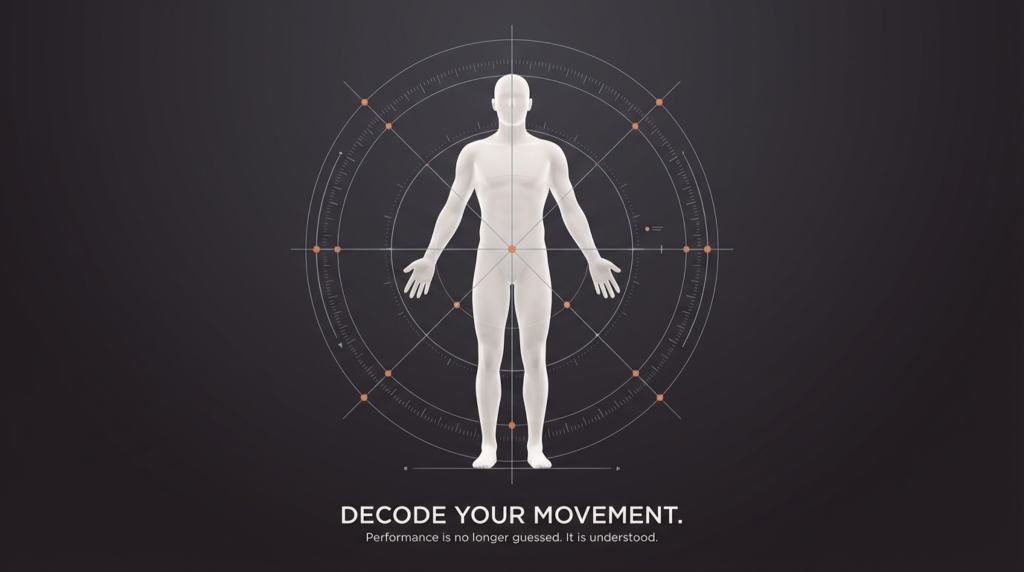
Decode Your Movement
Biomechanics isn’t about perfection; it’s about awareness. It’s about understanding when control is lost, why efficiency drops, and how fatigue actually shows up in your unique body.
When you can see your movement quality, your training becomes clearer, smarter, and safer.
That is the Darefore difference.
That is how you decode your movement.
When movement is understood, performance stops being guessed.